


This comprehensive repository contains detailed study notes, practical examples, and hands-on labs for Certified Ethical Hacker (CEH) v12 certification preparation. The content is organized into structured modules covering all major domains of ethical hacking and penetration testing.
| Module | Topic | Status | Key Tools |
|---|---|---|---|
| 01 | Introduction to Ethical Hacking | ✅ | Methodology, Legal Framework |
| 02 | Footprinting and Reconnaissance | ✅ | Nmap, theHarvester, Maltego |
| 03 | Network Scanning | ✅ | Nmap, Zenmap, Hping |
| 04 | Enumeration | 🔄 | Enum4linux, SNMPwalk, SMBclient |
| 05 | Vulnerability Analysis | ✅ | Nessus, OpenVAS, Nikto |
| 06 | System Hacking | ✅ | Metasploit, John, Hashcat |
| 07 | Malware Threats | ✅ | VirusTotal, YARA, Cuckoo |
| 08 | Sniffing | ✅ | Wireshark, tcpdump, Ettercap |
| 09 | Social Engineering | ✅ | SET, Gophish, BeEF |
| 10 | Denial of Service | ✅ | LOIC, HOIC, Hping3 |
| 11 | Session Hijacking | ✅ | Burp Suite, OWASP ZAP |
| 12 | Evading IDS, Firewalls & Honeypots | ✅ | Nmap, Fragroute, Covert_TCP |
| 13 | Web Server Hacking | ✅ | Nikto, DirBuster, Hydra |
| 14 | Web Application Hacking | ✅ | Burp Suite, SQLmap, OWASP ZAP |
| 15 | SQL Injection | ✅ | SQLmap, Havij, jSQL |
| 16 | Wireless Network Hacking | ✅ | Aircrack-ng, Reaver, Kismet |
| 17 | Mobile Platform Hacking | ✅ | APKTool, MobSF, Drozer |
| 18 | IoT Hacking | ✅ | Shodan, Firmware Analysis |
| 19 | Cloud Computing Security | ✅ | AWS CLI, ScoutSuite, CloudMapper |
| 20 | Cryptography | ✅ | Hashcat, John, CrypTool |
- AI-Powered Security Testing - Machine learning approaches to vulnerability detection
- Container Security - Docker and Kubernetes security assessment
- DevSecOps Integration - Security testing in CI/CD pipelines
- Zero Trust Architecture - Modern security frameworks and testing
- Quantum-Safe Cryptography - Post-quantum cryptographic methods
- Nmap - Network discovery and security auditing
- theHarvester - E-mail, subdomain and people names harvester
- Maltego - Link analysis for gathering and connecting information
- Shodan - Search engine for Internet-connected devices
- Google Dorking - Advanced search techniques for information gathering
- Nessus - Comprehensive vulnerability scanner
- OpenVAS - Open-source vulnerability assessment tool
- Nikto - Web server scanner
- OWASP ZAP - Web application security scanner
- Nuclei - Fast and customizable vulnerability scanner
- Metasploit Framework - Penetration testing platform
- Cobalt Strike - Adversary simulation and red team operations
- Empire - PowerShell and Python post-exploitation framework
- BloodHound - Active Directory attack path analysis
- Mimikatz - Windows credential extraction
- Burp Suite - Web vulnerability scanner and proxy
- SQLmap - Automatic SQL injection and database takeover tool
- Gobuster - Directory/file & DNS busting tool
- Wfuzz - Web application fuzzer
- XSSer - Cross-site scripting (XSS) detection tool
- Wireshark - Network protocol analyzer
- Ettercap - Comprehensive network security tool
- Aircrack-ng - Complete suite of tools for WiFi security assessment
- Hashcat - Advanced password recovery tool
- John the Ripper - Password cracking tool
📺 Fundamentals
| Understanding CIA Triad | Common Security Standards |
|---|---|
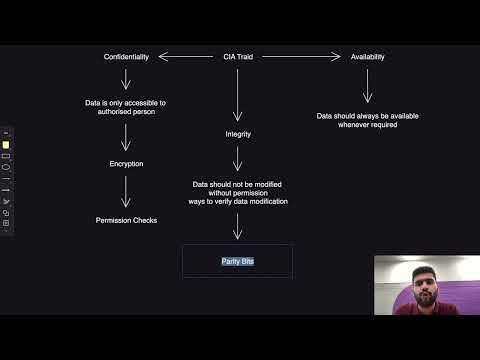 |
 |
| Security Teams | Types of Testing |
|---|---|
 |
 |
📺 Cryptography
| Encoding vs Decoding | Encryption vs Decryption |
|---|---|
 |
 |
- VulnHub - Vulnerable VMs for penetration testing practice
- TryHackMe - Guided cybersecurity learning platform
- Hack The Box - Penetration testing labs
- OverTheWire - Wargames and security challenges
- DVWA - Damn Vulnerable Web Application
- EC-Council CEH v12 Curriculum - Official course materials
- NIST Cybersecurity Framework - Industry standards and guidelines
- OWASP Top 10 - Most critical web application security risks
- SANS Reading Room - White papers and research documents
# Recommended setup for CEH lab environment
- VMware Workstation Pro or VirtualBox
- Kali Linux 2024.x (Primary testing platform)
- Windows Server 2019/2022 (Target environment)
- Ubuntu Server 20.04/22.04 (Web applications)
- Metasploitable3 (Vulnerable target)
- DVWA (Web application testing)

# Minimum system requirements
- RAM: 16GB (recommended 32GB)
- Storage: 500GB SSD
- CPU: 4+ cores with virtualization support# Isolated lab network setup
- Host-only network: 192.168.100.0/24
- NAT network for internet access
- Separated attacker and victim segments
- Firewall rules for controlled environment# Network discovery
nmap -sn 192.168.1.0/24
# Port scanning
nmap -sS -sV -O target-ip
# Service enumeration
nmap -sC -sV -p- target-ip
# Vulnerability scanning
nmap --script vuln target-ip# Directory enumeration
gobuster dir -u http://target.com -w /usr/share/wordlists/dirb/common.txt
# SQL injection testing
sqlmap -u "http://target.com/page.php?id=1" --dbs
# XSS testing
python3 XSSer.py -u "http://target.com/search.php?q=test"# Monitor mode
airmon-ng start wlan0
# Capture handshake
airodump-ng -c 6 --bssid AA:BB:CC:DD:EE:FF -w capture wlan0mon
# Crack WPA/WPA2
aircrack-ng capture.cap -w wordlist.txt- Duration: 4 hours
- Questions: 125 multiple choice
- Passing Score: 70% (87.5 out of 125)
- Format: Computer-based testing
- Domains: 20 modules with varying weights
- Weeks 1-2: Fundamentals and legal framework
- Weeks 3-4: Reconnaissance and scanning techniques
- Weeks 5-6: Vulnerability assessment and system hacking
- Weeks 7-8: Web applications and network security
- Weeks 9-10: Advanced topics (wireless, mobile, IoT)
- Weeks 11-12: Review and practice exams
- Official EC-Council Practice Tests
- Boson ExSim-Max for CEH
- MeasureUp CEH Practice Tests
- Transcender CEH Exam Simulator
- Adversary Simulation - APT techniques and TTPs
- Persistence Mechanisms - Maintaining long-term access
- Lateral Movement - Network traversal techniques
- Command & Control - C2 frameworks and communication
- Threat Hunting - Proactive threat detection
- Incident Response - Security incident handling
- Digital Forensics - Evidence collection and analysis
- Security Monitoring - SIEM and SOC operations
- ISO 27001 - Information security management
- NIST Framework - Cybersecurity risk management
- PCI DSS - Payment card industry standards
- GDPR - Data protection regulations
We welcome contributions to improve this study guide! Please:
- Fork the repository
- Create a feature branch (
git checkout -b feature/improvement) - Commit your changes (
git commit -am 'Add new content') - Push to the branch (
git push origin feature/improvement) - Create a Pull Request
- Follow existing markdown formatting
- Include practical examples and commands
- Verify all links and references
- Add proper attribution for external content
- Test all code examples before submission
- Discord Server: Join our community
- Telegram Group: @CEHStudyGroup
- Reddit: r/CEH
- LinkedIn: CEH Study Group
- YouTube Channel: Pentesting-Club
- Blog: Latest Security Research
- Twitter: @PentestingClub
Important: This repository contains educational content for Certified Ethical Hacker (CEH) preparation. All techniques, tools, and payloads are provided for educational and authorized testing purposes only.
- Only use techniques in authorized testing environments
- Obtain proper written permission before conducting any security tests
- Respect privacy and confidentiality of all systems and data
- Report discovered vulnerabilities responsibly
- Comply with all applicable laws and regulations
Users are solely responsible for their actions and must ensure compliance with:
- Local and international laws
- Organizational policies and procedures
- Professional ethical standards
- Authorized testing scope and limitations
The repository maintainers assume no liability for misuse of the provided information.
This project is licensed under the MIT License - see the LICENSE file for details.
⭐ Star this repository if it helps you in your CEH journey!
Last updated: January 2024 | CEH v12 Compatible